
The 1-Acre Survival Math: Caloric Density Over Garden Aesthetics
Affiliate disclosure: We may earn a commission from purchases at no extra cost to you.
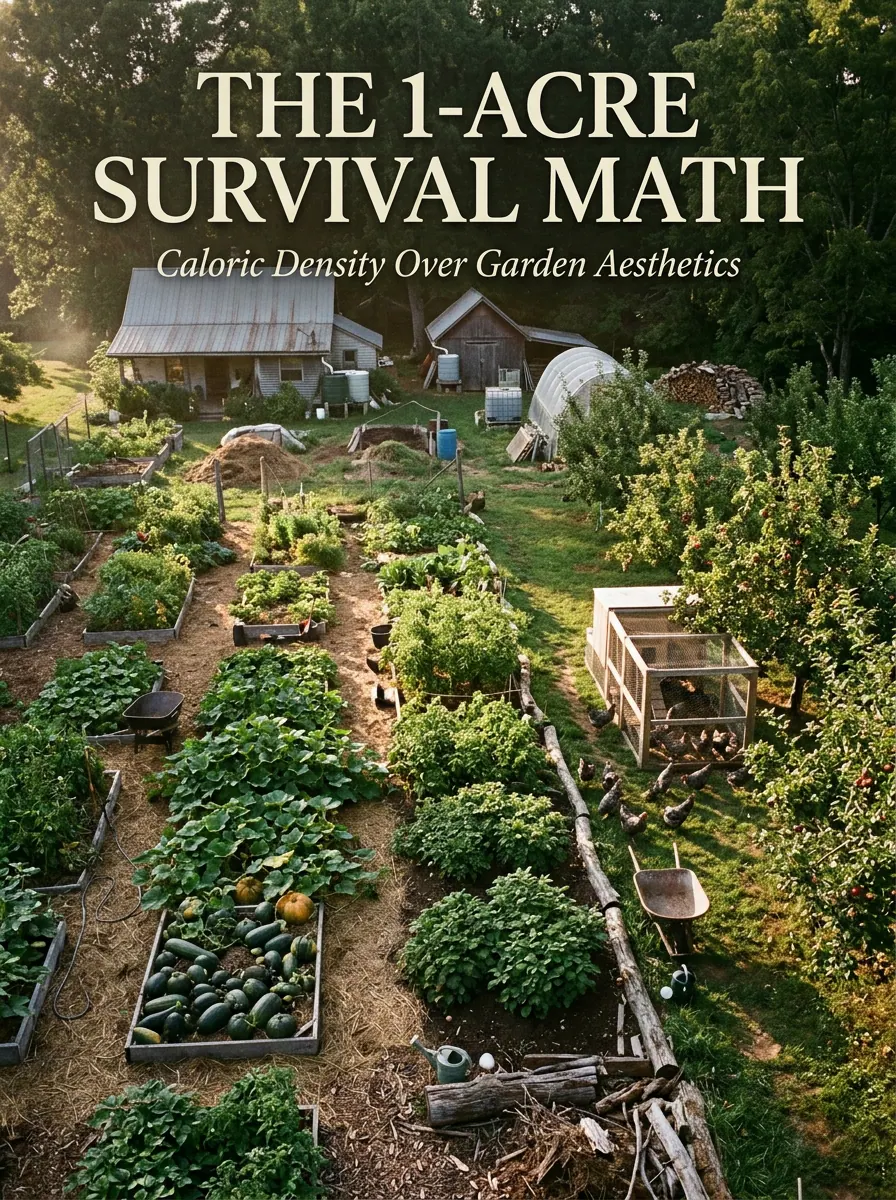
A potato row can carry more survival calories than a bed of salad greens because calories—not harvest-basket variety—are the limiting resource. As a rough planning figure, a productive acre yielding 20,000 pounds of potatoes can produce around 7 million calories before losses. That puts 1 million calories at roughly 6,200 square feet on paper; in real planning, allow 8,000–12,000 square feet for seed, spoilage, uneven yields, and crop failure.
A million calories is about 2,740 calories a day for one person over a year. That gives an adult a buffer above a 2,000–2,500-calorie daily planning range, but it is not a promise of a harvest: soil, climate, pests, water, and storage all change the result.
Count calories before you count varieties
Potatoes and sweet potatoes earn space because they yield substantial calories per square foot. Dry beans bring calories plus protein, fiber, and storage durability. By contrast, lettuce, cucumbers, and many other watery greens can provide important nutrients but few calories for the space they occupy.
That doesn’t mean you should stop growing greens. It means don’t mistake a full garden basket for a full food reserve. Build the calorie base first, then make room for nutrition and variety.
Quick rule: Plan staple acreage from expected local yields, then add a reserve for losses. Don’t calculate your family’s survival calories from an ideal seed-catalog harvest.
One acre is 43,560 square feet, but a household’s useful growing area is not all edible crop. Paths, compost space, crop rotation, and imperfect seasons take their share. Keep a written estimate of calories harvested and stored—not just pounds picked.
Harvest once; eat through winter
High-yield crops only help if they survive storage. Potatoes need darkness, airflow, and cool conditions; inspect them regularly and remove damaged tubers before rot spreads. Winter squash needs curing and a dry, ventilated storage spot. Dry beans need to be fully dried and protected from moisture and pests.
A traditional root cellar can work without electrical climate control, but conditions vary by crop and region. Separate crops by their preferred temperature and humidity rather than piling everything together: sweet potatoes prefer warmer storage than many root vegetables. If you don’t have a cellar, use the coolest suitable dark area you can monitor, and check stored food often.
For a non-perishable Emergency Food Supply, pair homegrown produce with sealed dry staples. White rice, wheat, and dry beans stored in sealed Mylar with correctly sized oxygen absorbers can keep for decades under cool, dry conditions. Label every package with its contents and packing date, and rotate food you actually eat.
Add animal protein without feeding the whole farm
Eggs, dairy, or meat can improve a household’s diet, but animals require feed, water, and labor. Don’t count their protein as “free” or assume all animals can live on scraps. Start with the staple crops your household can reliably grow and store; add animals only when their feed plan is realistic.
The same discipline applies to your pantry: total the calories on hand, divide by household members, and compare that figure with your daily target. A garden is a seasonal calorie engine. A stocked, rotated pantry is what bridges the gap when harvests fail—or the power goes out.
Related Articles
More guides and insights from this publication